


Gene K. Lee, MD, MPH
Facial Fat Grafting in Beverly Hills
Facial fat grafting at LA MÔEM Plastic Surgery presents a sophisticated, natural way to restore youthful volume and soften hollow or sunken areas of the face. Under the care of board-certified plastic and reconstructive surgeon Gene K. Lee, MD, MPH, patients in Beverly Hills and the greater Los Angeles area obtain precise facial volumization using their own fat.
As a facelift specialist, Dr. Lee often uses facial fat grafting as an effective adjunct to deep-plane facelifts. Patients can expect a detailed, artistic approach that focuses on balance, safety, and natural-looking results.
Quick Links
What Is Facial Fat Grafting?
Facial fat grafting, also called fat transfer, is a surgical technique that uses your own fat to restore facial volume and improve contour. Small amounts of fat are gently harvested from donor areas of the body, purified, and then re-injected into carefully selected facial regions to address hollowness, shadowing, or early deflation.
At LA MÔEM Plastic Surgery, Dr. Lee performs facial volumization with microfat grafting via microcannula, an approach that places small, refined parcels of fat in a controlled, layered fashion. This technique allows him to sculpt the face with nuance and subtlety, creating soft transitions and a more youthful three-dimensional shape rather than simply “filling lines.”
What Is Facial Volumization with Microfat Grafting via Microcannula?
Microfat grafting refers to the use of finely prepared fat, placed in small amounts to build or restore volume gradually rather than in large, obvious deposits. Using a microcannula, a slender, blunt-tipped instrument, Dr. Lee can distribute the fat in tiny threads and droplets, following the natural contours and fat compartments of the face.
This method grants multiple important advantages:
- The microcannula technique offers high exactness and control for sculpting facial volume.
- Fat can be layered at different depths, from more profound structural support to softer, superficial enhancement.
- The approach aims to minimize tissue trauma, supporting both well-being and aesthetic finesse.
Microfat grafting via microcannula is particularly helpful for patients who want a more global, harmonious rejuvenation of the midface, lower eyelids, jawline, or temples, instead of isolated spot treatments.
How Does Facial Fat Grafting Compare to Dermal Fillers?
Both facial fat grafting and dermal fillers can address volume loss; however, they do so in different ways and are often used for different goals. On the non-surgical side of the practice, injectable fillers can be ideal for subtle, adjustable enhancements or for patients who prefer a non-surgical approach.
By contrast:
- Facial fat grafting is a surgical procedure that uses your own tissue rather than synthetic fillers.
- It is especially well-suited to more marked or widespread volume loss, such as sunken cheeks, sunken temples, or significant under-eye hollowing.
- Fat grafting is often performed in conjunction with other facial surgeries, such as faceliftor eyelid surgery, to simultaneously lift and re-volumize the face.
During your consultation, Dr. Lee can help you understand whether facial fat grafting, dermal fillers, or a combination of both is better suited to your anatomy, timeline, and long-term goals.
What Areas Can Facial Fat Grafting Improve?
Because facial fat grafting works with the natural fat compartments of the face, it can be customized to address a range of age-related changes. Depending on your needs, Dr. Lee may recommend fat grafting for:
- Hollow or flattened cheeks
- Deepening of the pre-jowl sulcus and early jowl shadows along the jawline
- Under-eye hollowing and tear trough grooves
- Thinning in the temples
- Subtle contour refinement around the brow, midface, or chin
In many cases, several of these areas are treated in a single session to restore enhanced cohesive facial fullness. Rather than “filling everything,” Dr. Lee focuses on recreating the youthful topography of the face, restoring support where it has been lost and softening transitions between facial planes.
Can Facial Fat Grafting Be Used As an Adjunct to Facelift?
Fat grafting with a microcannula is a strong adjunct to deep-plane facelift surgery. During a facelift, tissues are lifted and repositioned, but age-related bone and fat loss often continue to leave the midface, temples, or under-eye areas appearing hollow.
When facial fat grafting is added:
- The facelift’s lift is complemented by carefully targeted volume restoration.
- Sunken or shadowed areas, such as the cheeks, pre-jowl sulcus, or tear troughs, can be softened for a more complete rejuvenation.
- The overall result tends to look more natural and youthful, correcting both sagging and deflation.
Patients may start by exploring facial volumization and later choose to combine it with a facelift if they wish to address more advanced skin laxity and jowling. Dr. Lee will explain when it makes sense to combine procedures rather than stage them separately.
Who Is a Good Candidate for Facial Fat Grafting?
Facial fat grafting may be an option if you are concerned about volume loss, hollowing, or a “tired” or gaunt appearance that is not fully explained by skin laxity alone. Good applicants normally:
- Are in good overall health and are non-smokers, or are willing to stop smoking as directed
- Have noticeable hollowing in areas such as the cheeks, under-eyes, temples, or jawline
- Have adequate donor fat in areas such as the abdomen, flanks, or thighs for harvesting
- Understand that while fat grafting can offer long-term improvement, individual fat survival can vary and results are not guaranteed
Fat grafting can be appropriate for a range of ages. Younger patients may choose it to address congenital or post-weight-loss hollowing, while more mature patients often use it as part of a comprehensive facial rejuvenation strategy.
What Can You Expect During Facial Fat Grafting?
Your facial fat grafting journey starts with an in-depth consultation with Dr. Lee. He will evaluate your facial structure, review your medical history, and help you determine which areas of volume loss bother you most.
In general, the procedure involves four key steps:
- Planning and marking. Dr. Lee maps out the specific regions of the face that will receive fat, along with the donor areas from which fat will be harvested.
- Fat harvesting. Through small incisions in discreet locations, fat is gently removed from selected donor sites using techniques designed to preserve fat cell viability.
- Purification and preparation,.The harvested fat is processed to remove excess fluid and impurities, allowing Dr. Lee to work with refined “microfat” that is well-suited for facial injection.
- Microfat grafting via microcannula. Using a microcannula, Dr. Lee introduces the purified fat into targeted facial areas in small amounts, layering it at different depths to build soft, natural contour.
Because this is a surgical procedure, it is typically performed in an accredited setting, and anesthesia options will be reviewed with you beforehand to prioritize your comfort and safety.
What Can You Expect During Recovery, Downtime, and Aftercare?
Recovery from facial fat grafting includes healing at both the donor site and the treated facial areas. You can expect some degree of swelling and bruising, particularly around the areas where fat is injected and harvested.
General points that Dr. Lee commonly reviews with patients include:
- Anticipating swelling and bruising that will gradually improve over time
- Keeping the head elevated and following detailed aftercare instructions to support healing
- Avoid pressure or vigorous manipulation of the treated areas during the early healing phase
Because each patient’s treatment plan is individualized, especially when fat grafting is combined with other facial procedures, Dr. Lee will tailor post-operative guidance to your specific surgery, lifestyle, and medical considerations.
When Will I See My Results, and How Long Can They Last?
Facial fat grafting results evolve over time. Initial swelling can make treated areas look fuller than your final outcome. As swelling decreases and the transferred fat settles, the contour becomes more refined and natural.
While individual experiences differ, patients are typically counseled to expect:
- An early phase characterized by swelling and fullness
- A gradual transition over weeks to months as the body integrates the transferred fat
- Long-term changes occur once the surviving fat cells have established a blood supply and become part of your facial soft tissue
Because the fat used is your own living tissue, the portion that successfully incorporates can offer durable volume in the treated areas. However, normal aging and daily habits will continue to influence your appearance over time.
Why Choose Dr. Gene K. Lee for Facial Fat Grafting in Beverly Hills?
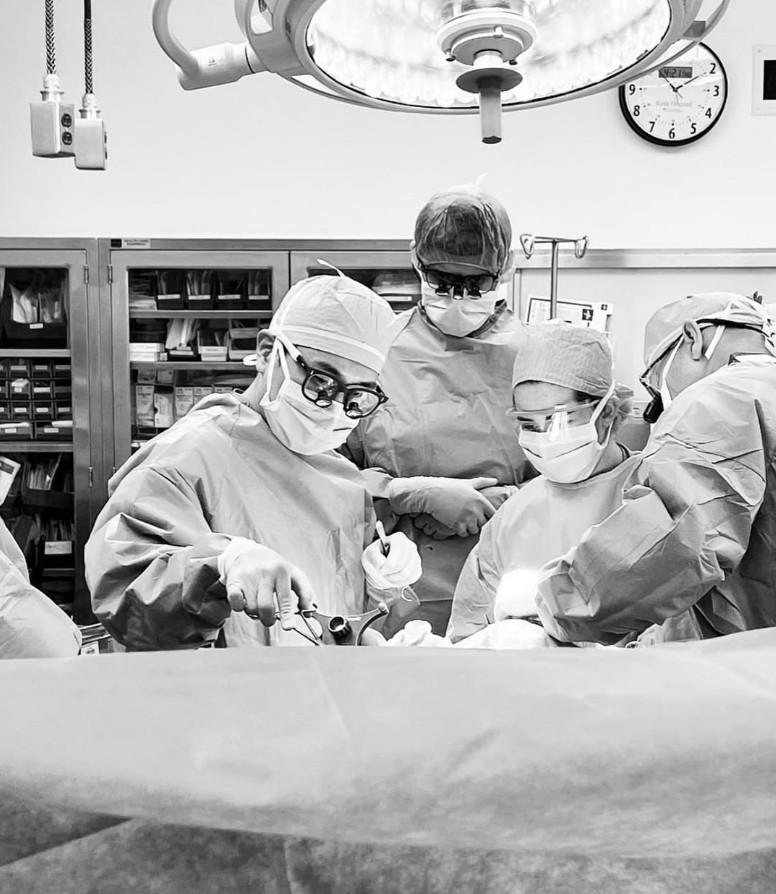
Facial fat grafting requires both technical exactness and a refined artistic sense. Dr. Gene K. Lee’s dual residency training in general surgery and plastic and reconstructive surgery, along with his focus on facial rejuvenation, uniquely positions him to perform this procedure with a high level of detail and safety.
Patients choose LA MÔEM Plastic Surgery for facial fat grafting because:
• Dr. Lee has extensive experience with deep-plane facelifts and adjunctive fat grafting, giving him a sophisticated understanding of facial anatomy, aging patterns, and soft-tissue dynamics.
• He uses microcannula-based techniques to distribute fat thoughtfully, emphasizing gradual, diffused volume rather than heavy or overfilled results.
• His practice view centers on natural-looking outcomes that honor each patient’s unique identity, rather than chasing fads or extreme changes.
• Care is delivered in a boutique environment where you have access to the full spectrum of facial solutions, from facelift and neck lift to rhinoplasty and non-surgical treatments.
If you are considering facial fat grafting, you will have the opportunity to meet with Dr. Lee in person, review before-and-after examples, and discuss a plan that aligns with your goals and comfort level.
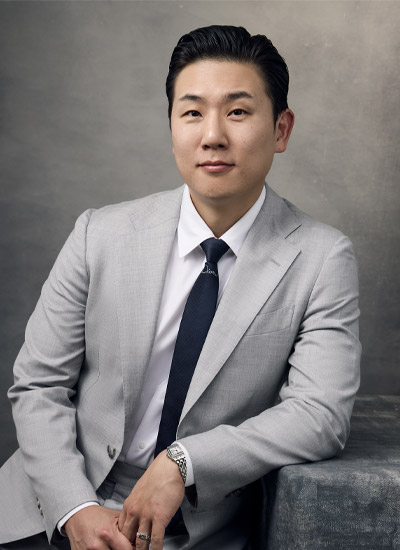
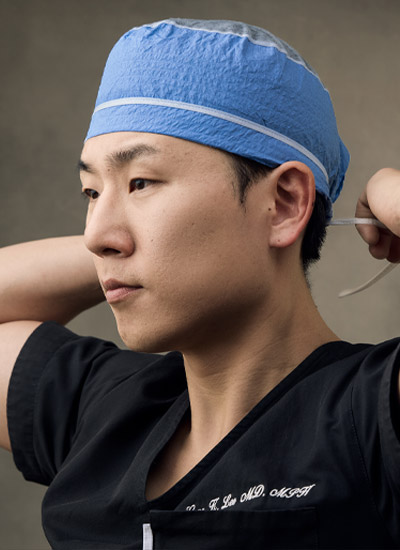
Meet Gene K. Lee MD, MPH, FACS
Board-Certified Plastic Surgeon
At LA MÔEM Plastic Surgery, Dr. Gene K. Lee combines advanced surgical training with a thoughtful, ethical approach to aesthetic care. Known for his natural-looking results and deep respect for each patient’s unique goals and cultural identity, Dr. Lee creates personalized treatment plans focused on safety, integrity, and long-term satisfaction. When you choose Dr. Lee, you’re choosing a surgeon who values your trust and is dedicated to helping you look and feel your best—authentically.


How Can You Schedule a Facial Fat Grafting Consultation?
If you would like to explore whether facial fat grafting is right for you, the next step is to schedule a private consultation with Dr. Gene K. Lee at LA MÔEM Plastic Surgery in Beverly Hills.
During your visit, Dr. Lee will listen to your concerns, review your medical history, assess both potential donor areas and facial anatomy, and present a customized approach to facial volumization with microfat grafting via microcannula.
Facial Fat Grafting FAQs
Is facial fat grafting always done with a facelift?
No. While fat grafting is a common adjunct to facelift surgery in Dr. Lee’s practice, it can also be performed as a standalone procedure for patients whose primary concern is volume loss rather than significant skin laxity. During your consultation, Dr. Lee will explain whether fat grafting alone, facelift alone, or a combination of both is likely to best match your anatomy and goals.
Where does the fat used for facial grafting come from?
Fat is typically harvested from areas where you have a modest surplus, such as the abdomen, flanks, or thighs. The amount of fat removed is usually small compared to body-contouring procedures, since facial fat grafting requires relatively limited volume. The focus is on gentle techniques that help preserve the health of the fat cells before they are processed and re-injected into the face.
Will I feel lumps or bumps after facial fat grafting?
Immediately after surgery, you may notice areas of fullness or firmness related to swelling and the recent placement of fat. As swelling resolves and the fat integrates, these areas usually soften and blend more smoothly with surrounding tissues. Dr. Lee’s microcannula technique distributes small amounts of fat in layered passes, helping reduce the risk of obvious clumping. He will also provide instructions for what to expect and when to contact the office if something appears unusual.
How does recovery from facial fat grafting compare to recovery from fillers?
Dermal fillers are office-based, non-surgical treatments with minimal downtime, whereas facial fat grafting is a surgical procedure with a more involved recovery. With fat grafting, you are healing at both the donor site and the treated facial areas, and swelling can last longer than with fillers. However, once healed, the fat that survives generally becomes part of your own tissue, providing durable volume where fillers would eventually be reabsorbed and need to be repeated.
Can facial fat grafting be combined with eyelid surgery or brow lift?
Yes. Facial fat grafting is often combined with procedures such as eyelid surgery or an endoscopic brow lift to address volume loss while also improving skin excess or brow position. Combining procedures can help create a more comprehensive, harmonious rejuvenation of the eyes and upper face. Whether these options are appropriate for you will depend on your anatomy, medical history, and priorities.
How long will my facial fat grafting results last?
Because facial fat grafting uses your own living tissue, the portion of fat that successfully integrates can provide lasting fullness. However, not all transferred fat survives, and your body will continue to age. Dr. Lee will counsel you on typical expectations, discuss how much over-correction, if any, may be appropriate initially, and explain how lifestyle elements and natural aging can influence your long-term results.
Is facial fat grafting right for me if I am very thin?
Even slender patients may have enough localized fat for facial grafting, though options can be more limited in very lean individuals. During your consultation, Dr. Lee will examine potential donor sites and determine whether there is sufficient fat for a safe and meaningful transfer. If donor volume is minimal, he may recommend alternative or complementary approaches, such as injectable fillers, to achieve your desired level of facial volumization.