



At a certain point in facial aging, adding volume and lifting tissue are no longer the same thing.
Dermal fillers can be remarkably effective when the problem is lost fullness. They can restore volume to the cheeks, soften certain folds, and subtly improve facial contour without surgery. However, when the cheeks themselves have begun to descend, adding more filler may not address what is actually causing the change.
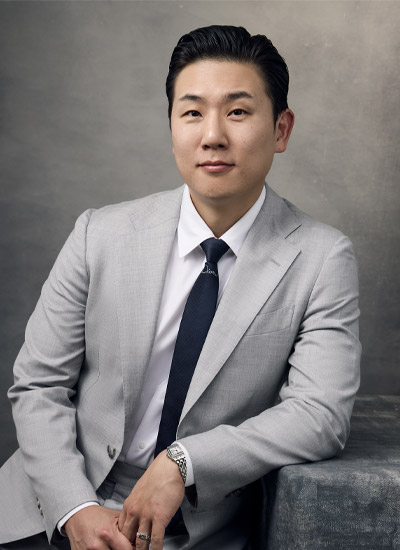
For patients considering facial rejuvenation in Beverly Hills and Los Angeles, understanding this distinction can make the choice between fillers and a mid-facelift much clearer. At LA MÔEM Plastic Surgery, board-certified plastic surgeon Dr. Gene K. Lee views the face as a whole, considering not only where volume has been lost but also how deeper tissues have shifted over time.
The right treatment is not necessarily the least invasive or the most aggressive. It is the one that addresses the anatomy responsible for what you are seeing.
What Happens to the Midface as We Age?
Facial aging is more complicated than simply losing collagen or developing wrinkles. Over time, several changes occur together. Facial fat compartments can lose volume, the underlying facial structures change, and tissues that once sat higher on the cheek gradually descend.
These changes are particularly noticeable through the midface, which includes the cheeks and the area extending toward the nasolabial folds around the nose and mouth.
You may begin to notice:
- Flatter or less defined upper cheeks
- Heaviness through the lower portion of the cheek
- Deeper nasolabial folds
- A less smooth transition between the lower eyelid and cheek
- Facial contours that seem to sit lower than they did previously
- A tired or heavier appearance even when you feel rested
Some of these changes result from lost volume. Others occur because the existing tissues have shifted downward. Often, both are happening at the same time.
That distinction matters because fillers and surgery address those problems differently.
What Can Fillers Do for the Midface?
Dermal fillers and other non-surgical treatments can be an excellent choice when facial volume loss is the primary concern.
Strategically placed filler can restore fullness to areas that have become hollow or deflated, improve cheek contour, and create better balance between facial features. Because treatment is performed without surgery and generally requires little downtime, fillers also appeal to patients who want a more gradual approach to facial rejuvenation.
Someone with good skin elasticity and relatively little tissue descent may achieve exactly the improvement they want with carefully placed filler.
Fillers are particularly useful when the concern is essentially: There used to be volume here, and now there is less.
The limitation comes when the problem changes from volume loss to tissue position.
What Can’t Fillers Do?
Fillers do not surgically reposition the deeper structures of the face, which becomes increasingly important as facial aging progresses.
Imagine that the youthful cheek has gradually shifted downward. Adding filler above or around that tissue can sometimes improve contour, but it does not physically return the descended tissue to its previous position. When enough lifting is needed, continuing to add volume may eventually produce diminishing returns.
In some patients, trying to create a lifting effect with additional filler can even make the face appear fuller or heavier without adequately correcting the underlying descent.
This does not mean that filler has stopped being useful. It means the problem being treated may have changed.
When you find yourself needing increasing amounts of filler to maintain an effect that once required very little (or when you add volume but still see heaviness, folds, or sagging), it may be worth asking whether a surgical approach would address the anatomy more directly.
How Is a Mid Facelift Different?
Dr. Lee’s facelift approach addresses the deeper layers responsible for facial support.
In deep-plane facelift surgery, for example, the facial retaining ligaments and deeper tissues can be released and repositioned so that descended tissues are elevated in a more youthful direction.
For the midface, that can mean restoring the cheek tissues to a higher position and improving the relationship between the cheeks and the lower face.
How Do I Know If I Have Volume Loss or Sagging?
Patients do not always need to know the answer before their consultation. In fact, what looks like “volume loss” in the mirror may actually be a combination of deflation and tissue descent.
There are, however, a few clues.
Fillers may still be the better fit if you have relatively firm skin and good facial support but notice isolated areas of hollowing or diminished cheek fullness. You may also prefer injectables if your desired change is modest or you are not ready for the recovery associated with surgery.
A surgical approach may deserve consideration when:
- Your cheeks appear to have shifted downward rather than simply become flatter
- Nasolabial folds have become more prominent along with cheek descent
- The lower face looks heavier despite maintaining a stable weight
- Filler improves volume but no longer creates the degree of rejuvenation you want
- You feel as though you are repeatedly “chasing” facial aging with injections
- You want a more comprehensive and lasting structural improvement
A consultation allows Dr. Lee to evaluate skin quality, remaining facial volume, the location of the fat compartments, the degree of tissue descent, facial proportions, and how these changes relate to one another.
Can Fillers and Facelift Surgery Be Used Together?
Absolutely. Facial aging rarely involves only one anatomical change, which is why the best solution is not always an either-or decision.
Dr. Lee describes aging as a combination of tissue sagging, facial fat deflation, and changes to the underlying facial structure. A facelift can reposition descended tissues, but it does not automatically replace every bit of volume that has been lost over the years.
For this reason, Dr. Lee may incorporate volume restoration when performing facial rejuvenation. His surgical approach can include fat grafting alongside facelift surgery to restore areas of hollowing while the facelift addresses tissue position.
Non-surgical treatments can also continue to have a role before or after surgery when appropriate.
The most natural-looking rejuvenation often comes from recognizing what needs to be lifted, what needs volume, and what should simply be left alone.
Is a Mid Facelift More Natural-Looking Than Fillers?
Neither treatment is inherently more natural than the other. Natural results depend on choosing the appropriate treatment and using it with restraint.
Well-placed filler can be extremely subtle. Likewise, a thoughtfully performed facelift should not leave the face appearing tight, stretched, or fundamentally different.
Dr. Lee’s surgical philosophy emphasizes repositioning the deeper structures rather than relying on excessive tension on the skin. His deep-plane facelift technique allows him to work with the facial ligaments, midface fat pads, and deeper tissue layers so that rejuvenation comes from restoring facial structure rather than simply pulling the surface tighter.
The intention is not to create a different face. It is to restore the relationships between facial features that have gradually changed with age.
What About Recovery?
One of the clearest advantages of fillers is convenience. Injectable treatments generally involve substantially less downtime than facial surgery, making them appealing for patients who want improvement without stepping away from their normal routine for an extended period.
A facelift requires more planning.
Dr. Lee advises facelift patients to generally allow approximately two weeks for most early swelling and bruising to improve enough to feel comfortable returning to social activities. Patients gradually resume normal activity afterward, with most regular exercise and activities returning over the following weeks.
That greater investment in recovery accompanies a more comprehensive treatment. Unlike filler, which temporarily adds volume, facelift surgery physically repositions facial tissues and is designed to provide a longer-lasting structural change.
When Is It Time to Consider Surgery Instead of More Filler?
Some patients remain excellent candidates for injectables for many years. Others develop facial descent relatively early and discover that adding more volume does not produce the refreshed appearance they are looking for.
A more useful question is: What is actually causing the change I want to correct?
If the answer is volume loss, filler may remain the simplest and most appropriate treatment. If the answer is descended tissue, significant laxity, or a combination of structural changes, surgery may be able to accomplish something injectables cannot.
At LA MÔEM Plastic Surgery, Dr. Lee evaluates both surgical and non-surgical possibilities rather than assuming one treatment is right for everyone. The decision comes down to your anatomy, how much change you want, your tolerance for downtime, and what will produce a balanced result without asking one treatment to do a job it was never designed to do.
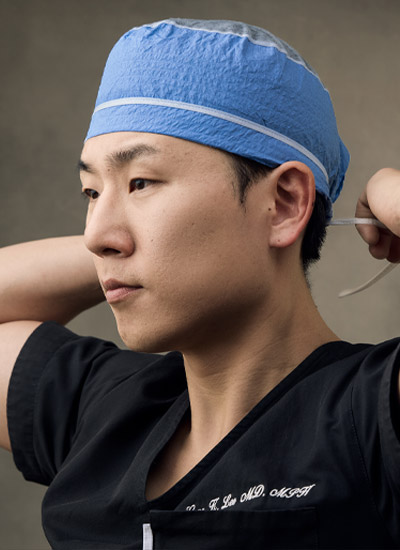
Meet Gene K. Lee MD, MPH
Board-Certified Plastic Surgeon
At LA MÔEM Plastic Surgery, Dr. Gene K. Lee combines advanced surgical training with a thoughtful, ethical approach to aesthetic care. Known for his natural-looking results and deep respect for each patient’s unique goals and cultural identity, Dr. Lee creates personalized treatment plans focused on safety, integrity, and long-term satisfaction. When you choose Dr. Lee, you’re choosing a surgeon who values your trust and is dedicated to helping you look and feel your best—authentically.