



Gene K. Lee, MD, MPH
Buccal Fat Removal in Beverly Hills, CA
Some faces naturally carry more fullness in the lower cheeks, even at a healthy, stable weight. For patients who feel this fullness makes their face look overly round or obscures the definition of their cheekbones and jawline, buccal fat removal can create a slimmer, more sculpted facial contour.
The procedure removes a carefully selected amount of fat from the buccal fat pads located deep within the cheeks. Because this fat contributes to the face’s natural shape and softness, successful treatment depends on more than removing as much as possible. Facial proportions, existing volume, bone structure, age, and how the face may change over time all need to be considered.
At LA MÔEM Plastic Surgery in Beverly Hills, board-certified Plastic and Reconstructive Surgeon Gene K. Lee, MD, MPH, takes a conservative, individualized approach to facial contouring. His goal is to create greater definition where appropriate while preserving the natural volume needed for facial balance and long-term harmony.
Continue reading to learn more about buccal fat removal in Beverly Hills with Dr. Gene K. Lee, or contact us online today to schedule your consultation. We are located in Beverly Hills and proudly welcome patients from the Inland Empire, San Fernando Valley, Downtown Los Angeles, Pasadena, and the greater Los Angeles area.
Quick Links
What Is Buccal Fat Removal?
The buccal fat pad is a naturally occurring pocket of fat located deep within each cheek between the cheekbone and jaw.
Everyone has buccal fat, but its size varies considerably from person to person. Some people naturally have larger buccal fat pads that contribute to a softer or rounder appearance in the lower cheeks, regardless of their overall body weight.
Buccal fat removal, sometimes called cheek reduction surgery, is a facial contouring procedure that removes part of this fat pad through small incisions placed inside the mouth.
Reducing buccal fat can create greater definition beneath the cheekbones and help create a more tapered transition toward the jaw.
The most natural facial contours depend on a balance between the cheekbones, midface volume, lower cheeks, jawline, chin, and surrounding soft tissues. Removing too much volume can disrupt that balance just as easily as excessive fullness can.
Dr. Lee therefore approaches buccal fat removal as a precise facial-contouring procedure rather than aggressive fat reduction.
What Can Buccal Fat Removal Improve?
Buccal fat removal is designed to address fullness in a very specific part of the face.
It may improve:
- Naturally round or full lower cheeks
- Persistent cheek fullness despite maintaining a healthy weight
- Limited definition beneath the cheekbones
- A facial shape that appears wider or softer through the lower cheeks
- Disproportionate buccal fullness compared with the rest of the face
- A desire for greater cheekbone and facial contour definition
- The procedure is not intended to treat every cause of facial fullness.
For example, fullness beneath the chin may respond better to submental liposuction, while facial swelling, enlarged jaw muscles, skeletal anatomy, skin laxity, or superficial facial fat may require a different approach.
Similarly, buccal fat removal does not lift sagging tissues or correct jowls.
Determining exactly where facial fullness comes from is therefore essential before deciding whether this procedure will create the change you want.

Who Is a Good Candidate for Buccal Fat Removal in Beverly Hills?
The strongest candidates generally have naturally prominent buccal fat pads that create persistent fullness through the lower cheeks.
You may be a candidate if:
• Your cheeks remain noticeably full despite being at a stable weight
• You feel your lower cheeks are disproportionate to the rest of your face
• You would like greater definition beneath your cheekbones
• You have naturally round facial proportions
• You are in good overall health
• Your weight is relatively stable
• You do not smoke or are willing to stop as directed
• You understand that the amount of fat removed should be conservative and individualized
• You have realistic expectations for the degree of facial slimming possible
Two patients who both describe themselves as having a “round face” may have completely different reasons for that appearance. One may have prominent buccal fat, while another may have broader cheekbones, a smaller chin, enlarged jaw muscles, or fullness in a different layer of facial fat.
Dr. Lee examines the face three-dimensionally before determining whether the buccal fat pad is actually the structure that should be treated.
Who May Not Be a Good Candidate for Buccal Fat Removal?
Buccal fat removal is not appropriate for every face.
Patients who already have narrow, angular, or naturally lean faces may have little excess volume to spare. Removing buccal fat in these cases can potentially make the cheeks appear overly hollow.
Age is another important consideration. Facial volume naturally changes over time. The cheeks and temples can gradually lose fullness as part of the aging process, and structural changes beneath the skin also contribute to a hollower appearance.
As buccal fat removal is permanent, Dr. Lee considers not only how the face looks today but also how reducing deep cheek volume may affect facial balance in the future.
The procedure may be less appropriate if:
- Your face is already thin or narrow
- You have significant cheek hollowing
- You have experienced substantial age-related facial volume loss
- Your concern is primarily sagging rather than fullness
- Your perceived fullness comes from another anatomical structure
- You expect dramatic weight loss in the future
- You are seeking an exaggerated or extremely hollow cheek appearance
Dr. Lee’s current facial rejuvenation approach often emphasizes restoring lost volume with facial fat grafting when aging has produced hollow or sunken areas.
How Is Buccal Fat Removal Performed?
Buccal fat removal is typically performed through small incisions placed inside the mouth, which means the procedure generally does not create visible external facial scars.
Through the incision, Dr. Lee carefully accesses the buccal fat pad located within the cheek.
A controlled portion of the fat is gently delivered through the incision and removed. The same process is performed on the opposite side, with attention to facial symmetry and the natural differences that may already exist between the cheeks.
The incisions are then closed with sutures, which may be dissolvable, depending on the surgical plan.
The procedure can sometimes be performed using local anesthesia, while sedation or general anesthesia may be appropriate when buccal fat removal is combined with other facial procedures.
Although the incisions are small, the anatomy is delicate.
Branches of the facial nerve and the parotid salivary duct are located in the surrounding region, which is one reason buccal fat removal should be performed by a surgeon with a detailed understanding of facial anatomy.
How Much Buccal Fat Should Be Removed?
There is no ideal number of cubic centimeters or percentage of fat that should be removed from every patient. The right amount creates better facial balance without unnecessarily depleting natural cheek volume. For many patients, that means leaving part of the buccal fat pad intact.
While aggressive removal can create more immediate hollowing, dramatic hollowing is not necessarily a better aesthetic result. Facial volume is one characteristic associated with youth, and a face that looks sharply sculpted at one age may look increasingly depleted as natural volume loss occurs later.
Dr. Lee considers:
- Overall facial shape
- Cheekbone projection
- Existing cheek volume
- Lower facial width
- Jawline and chin proportions
- Facial asymmetry
- Skin quality
- Patient age
- Expected changes with aging
Buccal Fat Removal vs. Facial Liposuction: What Is the Difference?
Both procedures remove fat, but they target different fat compartments.
- Buccal fat removal treats the deep buccal fat pad located within the lower cheek.
- Facial liposuction removes more superficial fat using a cannula introduced beneath the skin. In facial contouring, liposuction is more commonly used under the chin and along the upper neck rather than to remove the deep buccal fat pad directly.
This distinction matters because facial fullness is layered.
A patient may have:
- Deep buccal fat
- Superficial cheek fat
- Submental fat
- Thick, soft tissue
- Large jaw muscles
- Skeletal features that create the appearance of facial width
Removing fat from the wrong layer may produce little improvement or create an undesirable contour. Dr. Lee identifies which anatomical structure is contributing most to the appearance before recommending a specific procedure.
Can Buccal Fat Removal Be Combined with Other Facial Procedures?
Yes, when the combination makes anatomical sense. Some patients seeking buccal fat removal also have concerns about the chin, jawline, neck, or other areas of the face.
Depending on your goals, treatment planning may involve another facial procedure designed to complement the contour created through the cheeks.
For example, a patient with both prominent lower-cheek fullness and excess fat beneath the chin may benefit from treating the two areas separately rather than expecting buccal fat removal to refine the entire lower face.
The same principle applies to non-surgical treatments. Dermal fillers and other non-surgical treatments can enhance certain facial contours by adding volume strategically, while buccal fat removal reduces volume from a specific area.
Although these approaches may sound contradictory, facial contouring often means redistributing visual emphasis rather than simply adding or subtracting volume everywhere.
Dr. Lee evaluates the entire face before recommending whether buccal fat removal should stand alone or become one component of a broader treatment plan.
Why Choose Dr. Gene K. Lee for Buccal Fat Removal in Beverly Hills, CA?
Dr. Gene K. Lee is a board-certified Plastic and Reconstructive Surgeon whose practice strongly emphasizes facial surgery and rejuvenation. His approach to facial aesthetics is based on balance rather than isolated features.
Dr. Lee’s facelift and facial fat grafting techniques show how much he values understanding the facial fat compartments, underlying anatomy, and the face’s three-dimensional contours. That perspective is especially important when considering fat removal.
During your consultation, Dr. Lee takes time to understand what you see when you look in the mirror and determine whether the buccal fat pad is truly responsible. If another treatment is more appropriate, he will explain why.
What to Expect During Your Buccal Fat Removal Consultation
Your consultation begins with a discussion of what you would like to change about your facial shape.
Dr. Lee may ask:
- Whether your cheeks have always appeared full
- Whether facial fullness changes substantially with your weight
- Whether you have recently lost weight
- Which part of the face appears too full to you
- Whether your concern is visible from the front, profile, or both
- Whether other family members have similar facial proportions
- Your medical and surgical history
- Current medications and supplements
- Smoking or nicotine use
- Your expectations for the final contour
Dr. Lee will then evaluate the face as a whole. This includes the cheekbones, midface volume, buccal region, chin, jawline, neck, skin quality, facial width, and existing asymmetries.
He will also determine whether your concern is truly being created by the buccal fat pad or another anatomical feature.
If surgery is appropriate, Dr. Lee will explain how much contour change is realistic, where the incisions will be placed, the anesthesia plan, recovery, potential risks, and how permanent volume reduction could interact with future facial aging.
The consultation is also an opportunity to discuss photographs or aesthetic references that illustrate what you like. Rather than attempting to recreate another person’s facial shape, Dr. Lee can help identify which aspects of that contour may or may not be compatible with your anatomy.
What Is Recovery Like After Buccal Fat Removal?
Because the incisions are inside the mouth, postoperative care involves managing facial swelling and maintaining careful oral hygiene.
Some swelling, tenderness, bruising, and temporary numbness are expected during the early recovery period. The cheeks may initially appear fuller rather than slimmer because of postoperative swelling.
Dr. Lee will provide detailed oral care instructions and may recommend a specific mouth rinse while the incisions heal.
Patients may also be instructed to begin with liquids or soft foods and gradually return to a normal diet as healing progresses.
During early recovery, you should:
- Follow all oral hygiene instructions
- Avoid disturbing the incisions with your tongue or fingers
- Take prescribed or recommended medications as directed
- Avoid smoking and nicotine
- Keep strenuous exercise limited until cleared
- Attend scheduled follow-up visits
- Contact the practice if you develop unusual swelling, bleeding, drainage, fever, or other concerning symptoms
Many patients can return to non-strenuous daily activities relatively quickly, although visible swelling may persist even after you feel physically comfortable.
The tissues inside the cheeks continue healing after normal activities resume.
Schedule Your Beverly Hills Buccal Fat Removal with Dr. Gene K. Lee
Dr. Gene K. Lee is a board-certified Plastic and Reconstructive Surgeon whose practice strongly emphasizes facial surgery and rejuvenation. His approach to facial aesthetics is based on balance rather than isolated features.
Dr. Lee’s facelift and facial fat grafting techniques show how much he values understanding the facial fat compartments, underlying anatomy, and the face’s three-dimensional contours. That perspective is especially important when considering fat removal.
During your consultation, Dr. Lee takes time to understand what you see when you look in the mirror and determine whether the buccal fat pad is truly responsible. If another treatment is more appropriate, he will explain why.
Meet Gene K. Lee MD, MPH
Board-Certified Plastic Surgeon
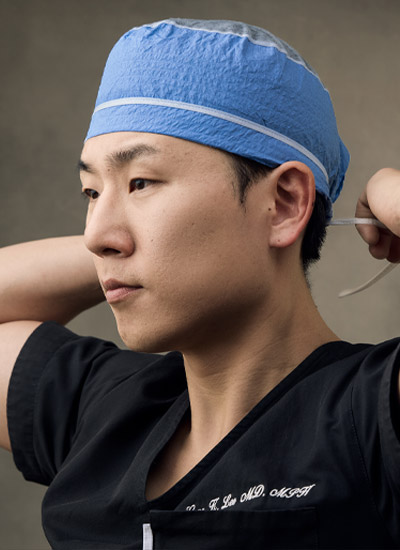
At LA MÔEM Plastic Surgery, Dr. Gene K. Lee combines advanced surgical training with a thoughtful, ethical approach to aesthetic care. Known for his natural-looking results and deep respect for each patient’s unique goals and cultural identity, Dr. Lee creates personalized treatment plans focused on safety, integrity, and long-term satisfaction. When you choose Dr. Lee, you’re choosing a surgeon who values your trust and is dedicated to helping you look and feel your best—authentically.







Los Angeles Buccal Fat Removal FAQ
Is buccal fat removal permanent?
Yes. The portion of the buccal fat pad that is surgically removed does not grow back in the same way. Because the change is permanent, careful patient selection and conservative treatment are particularly important.
Is buccal fat removal the same as cheek liposuction?
No. Buccal fat removal accesses a specific deep fat pad through an incision inside the mouth. Liposuction uses a cannula to reduce more superficial fatty tissue and is commonly used in other facial areas, such as beneath the chin.
Does buccal fat removal leave visible scars?
The incisions are generally made inside the mouth, so buccal fat removal typically does not create visible external scars.
Will buccal fat removal give me high cheekbones?
The procedure does not change the cheekbones themselves. By reducing fullness beneath them in an appropriate candidate, however, existing cheekbone definition may become more noticeable.
Can buccal fat removal make my jawline sharper?
It may create a more tapered lower-cheek contour, but it does not directly reshape the jawbone or remove fat beneath the chin. The degree of jawline improvement depends on your underlying anatomy and where the fullness is located.
Can I get buccal fat removal if I already have a thin face?
It may not be advisable. Patients with naturally narrow or lean faces have a greater risk of looking overly hollow after deep cheek fat is removed, particularly as additional facial volume is naturally lost with age.
What age is best for buccal fat removal?
There is no universal ideal age. Dr. Lee bases candidacy on facial anatomy, existing volume, stability of facial development and weight, and how the procedure is likely to affect long-term facial balance
Does buccal fat decrease naturally with age?
Facial fat distribution and volume change with aging, and the face commonly becomes less full over time. This is one reason Dr. Lee considers future volume loss when deciding whether permanent buccal fat reduction is appropriate.
How much buccal fat is removed?
There is no standard amount. Dr. Lee determines how much fat, if any, should be removed according to your facial proportions. Complete or aggressive removal is not automatically desirable.
Is buccal fat removal painful?
Patients receive anesthesia so they remain comfortable during the procedure. During recovery, soreness, swelling, and tenderness are expected, but Dr. Lee will provide instructions for managing postoperative discomfort.
What can I eat after buccal fat removal?
Patients may initially need liquids or soft foods while the incisions inside the mouth begin healing. Dr. Lee will provide specific dietary instructions and let you know when you can safely progress back to your normal diet.
How long does swelling last after buccal fat removal?
The most noticeable swelling occurs during the early recovery period and gradually improves over the following weeks. More subtle swelling can take longer to fully resolve, so the final result may not be apparent for several months.
What are the risks of buccal fat removal?
Potential risks include bleeding, infection, asymmetry, prolonged swelling, changes in sensation, injury to nearby facial nerve branches or the salivary duct, and an aesthetic result that is either insufficient or excessively hollow. Dr. Lee will review the potential risks in detail before surgery.
Can buccal fat removal be reversed?
The removed fat cannot simply be put back into the original buccal fat pad. If a patient later develops unwanted facial hollowing, volume-restoration procedures such as facial fat grafting may sometimes be considered, but this is not equivalent to reversing the original procedure.
Is buccal fat removal worth it?
For a carefully selected patient with persistent lower-cheek fullness and appropriate facial proportions, buccal fat removal can create greater definition while maintaining a natural appearance. For someone who already has limited facial volume, the tradeoff may not be worthwhile. A detailed facial evaluation is the best way to determine which category you fall into.