



Gene K. Lee, MD, MPH
Scar Revision in Beverly Hills, CA
Every scar tells part of the story of how the body healed. Some fade into thin, subtle lines over time, while others remain raised, widened, depressed, discolored, or otherwise more noticeable than expected. A scar can also become tight enough to pull on surrounding skin or interfere with comfortable movement.
Scar revision includes a range of surgical and non-surgical techniques designed to improve a scar’s appearance, texture, position, or function. The objective is not to erase the scar completely, as no treatment can do that, but to make it less conspicuous and better integrated with the surrounding skin.
At LA MÔEM Plastic Surgery in Beverly Hills, board-certified Plastic and Reconstructive Surgeon Gene K. Lee, MD, MPH, evaluates each scar individually. Its location, width, color, texture, orientation, underlying tension, age, and the way your body naturally forms scar tissue all influence which approach is likely to provide the greatest improvement.
Treatment may be as focused as resurfacing an irregular scar or as involved as surgically removing an old scar and carefully reconstructing the area with a new closure designed to heal more favorably.
Continue reading to learn more about scar revision in Beverly Hills with Dr. Gene K. Lee, or contact us online today to schedule your consultation. We are located in Beverly Hills and proudly welcome patients from the Inland Empire, San Fernando Valley, Downtown Los Angeles, Pasadena, and the greater Los Angeles area.
Quick Links
What Is Scar Revision?
Scar revision refers to treatments used to make an existing scar less noticeable or improve problems caused by abnormal scar formation.
Scarring is an unavoidable part of healing whenever the deeper layers of the skin are injured. The body responds by producing collagen to close and strengthen the wound. That process is essential, but the new tissue does not look or feel exactly like uninjured skin.
As a result, every surgical incision, traumatic wound, burn, or significant skin injury has the potential to leave a scar.
Many scars improve substantially with time. They gradually become flatter, softer, and lighter as the healing process matures. Others remain prominent because of their width, thickness, color, location, direction, or the amount of tension placed on the wound as it healed.
Scar revision attempts to improve these characteristics.
Depending on your scar, treatment may focus on:
- Making a scar narrower
- Flattening a raised scar
- Improving irregular texture
- Making the scar less noticeable against surrounding skin
- Repositioning a scar so that it follows natural skin lines more closely
- Releasing a scar that has become tight or restrictive
- Correcting a depressed or tethered scar
- Improving a poorly healed surgical incision
- Refining scars from previous trauma or surgery
The most appropriate approach depends on the scar itself rather than simply where it is located on the body.
What Types of Scars Can Be Improved?
Scars can develop in several different ways, and identifying the type of scar is an important first step in choosing treatment.
- Widened or Stretched Scars: Some scars gradually become wider after an incision or wound has closed. This may occur when the area is under considerable tension, when a wound crosses a highly mobile part of the body, or when the tissues lack adequate support during healing. A widened scar may be flat but considerably more visible than a thin surgical line.
- Hypertrophic Scars: A hypertrophic scar becomes thick and raised but remains within the boundaries of the original wound. These scars may appear red or darker than surrounding skin during healing and can sometimes feel firm, itchy, tender, or uncomfortable.
- Keloid Scars: Keloids are also raised scars, but unlike hypertrophic scars, they grow beyond the boundaries of the original injury. Keloid formation is influenced strongly by individual biology and occurs more frequently in certain anatomical areas and skin types. Because keloids tend to recur, managing them requires different considerations than routine surgical scar revision.
- Depressed or Tethered Scars: Some scars sit below the level of the surrounding skin or become attached to deeper tissues. This can create a visible indentation, pulling, or irregular contour. These scars may develop after trauma, surgery, acne, infection, or tissue loss beneath the skin.
- Contracture Scars: A scar contracture develops when scar tissue becomes tight enough to pull surrounding tissues together. Contractures may occur after burns, significant trauma, or wounds near joints and other areas that require substantial movement. Unlike a scar that is primarily a cosmetic concern, a contracture can affect function by limiting normal motion.
- Discolored or Texturally Irregular Scars: Some scars heal relatively flat but remain noticeable because their color or surface texture differs from the surrounding skin.
Depending on the scar’s characteristics, treatments such as CO2 laser resurfacing may be considered to improve texture and blend the scar more naturally with surrounding tissue.
Why Do Some Scars Heal More Noticeably Than Others?
Even a carefully repaired wound can produce a noticeable scar. Scar formation is influenced by a combination of factors, some of which can be controlled and others that cannot.
These may include:
- Genetics
- Skin type and natural pigmentation
- Location of the incision or injury
- Direction of the scar relative to natural skin lines
- Tension placed on the wound
- Infection
- Delayed wound healing
- Separation of an incision
- Trauma to the area during recovery
- Smoking or nicotine use
- Sun exposure
- Age
- Depth and severity of the original injury
- Previous surgery in the same area
- Individual tendency toward hypertrophic or keloid scarring
- Location can be particularly important.
A small incision hidden within a natural skin crease may become difficult to see after healing. A similar incision placed across an area that constantly stretches or moves may become wider or more noticeable.
This is one reason surgical scar revision involves more than simply cutting out an old scar.
Dr. Lee considers why the original scar may have healed poorly and whether revision can improve its position, orientation, surrounding tissue, or underlying tension.
Who Is a Good Candidate for Scar Revision?
Scar revision can be considered for scars almost anywhere on the face or body.
You may be a candidate if you have a scar that:
- Is wider or more prominent than expected
- Has become raised or thick
- Sits below the level of the surrounding skin
- Is tethered to deeper tissue
- Has healed with an irregular contour
- Remains conspicuous because of its texture
- Has become uncomfortable, tight, or restrictive
- Developed after previous surgery
- Developed following an injury or trauma
- Causes you significant aesthetic concern

Good candidates should also be generally healthy, have realistic expectations, and understand that treatment is intended to improve a scar rather than eliminate it completely.
Active smoking or nicotine use can interfere with circulation and wound healing, so Dr. Lee may require patients to stop before and after surgical treatment.
Any active infection, inflammation, or skin condition in the area may also need to be resolved before scar revision is performed.
Another important consideration is timing. A new scar can appear quite prominent early in healing and still improve considerably without surgery. Dr. Lee will determine whether the scar is mature enough to revise or whether additional healing should occur first.
How Is Scar Revision Performed?
Scar revision is not one specific operation. The procedure is customized according to the type, size, location, depth, and orientation of the scar.
For some scars, improvement may be possible without surgically removing the entire scar. Other scars require excision followed by a more precise reconstruction.
Surgical Scar Excision
When appropriate, Dr. Lee may remove the existing scar and carefully bring the healthier skin edges back together. The objective is to replace a wide, irregular, poorly positioned, or otherwise unfavorable scar with a new incision that has a better opportunity to heal as a finer line. Layered closure may be used when the scar extends into deeper tissues. Supporting the wound beneath the skin can help reduce tension along the visible surface.
Repositioning the Scar
Scar direction can influence how visible it appears. Natural creases and relaxed skin-tension lines can camouflage scars particularly well. A scar that crosses these lines at an unfavorable angle may remain more noticeable. For selected scars, Dr. Lee may use techniques that change the scar’s direction or redistribute tension. Techniques such as Z-plasty or W-plasty can break up a long straight scar, reorient portions of it, or lengthen scar tissue that has become contracted. These more advanced techniques are not necessary for every scar but can be particularly valuable in carefully selected cases.
Releasing Deeper Scar Tissue
A scar may sometimes adhere to the deeper tissues rather than moving freely with the surrounding skin. When this happens, surgical release may be necessary to free the tethered tissue and restore a smoother contour. The resulting space may require additional reconstruction depending on the depth of the depression and the condition of the surrounding tissue.
Combination Treatment
The best result does not always come from a single technique. Surgical revision may improve the width, position, or architecture of a scar, while a later resurfacing treatment may help refine remaining differences in texture.
Can CO2 Laser Resurfacing Improve a Scar?
Yes, certain scars may benefit from laser resurfacing.
Dr. Lee offers CO2 laser resurfacing at LA MÔEM Plastic Surgery to improve concerns involving skin texture, fine lines, sun damage, and scarring.
Rather than surgically removing a scar, CO2 laser treatment precisely resurfaces the skin and stimulates a healing response within the underlying tissue.
For scar treatment, it may be useful for improving:
- Uneven surface texture
- Certain depressed scars
- Acne scars
- Irregularity around an existing surgical scar
- Differences in how scarred skin blends with surrounding tissue
CO2 resurfacing cannot correct every scar. For example, a substantially widened scar may require surgical excision if the primary problem is its width rather than its surface texture. Likewise, a significant contracture may require surgical release rather than resurfacing alone.
Before recommending treatment, Dr. Lee determines whether the problem is primarily at the skin surface or involves deeper scar architecture.
In some cases, surgery and laser resurfacing can complement one another rather than serving as competing options.
When Should a Scar Be Revised?
Time is an important part of scar treatment.
A new scar goes through several phases as it heals. In the early stages, it may look red, pink, raised, firm, or more noticeable than it will eventually be.
Over the following months, scar tissue gradually remodels. The scar typically softens, flattens, and fades as this process continues.
Full scar maturation can take many months and sometimes a year or longer.
For this reason, Dr. Lee may recommend allowing a relatively new scar more time to mature before considering surgical revision, particularly when there is still a reasonable chance that its appearance will improve naturally.
Waiting is not necessary in every circumstance. Scars that restrict movement, create significant functional problems, or result from a wound-healing complication may require a different timeline.
The appropriate timing therefore depends on:
- How old the scar is
- Whether it is still changing
- The type of scar
- Location
- Symptoms
- Functional limitations
- Previous treatments
- Cause of the scar
- Quality of the surrounding tissue
Dr. Lee will examine the scar and determine whether intervention now is appropriate or whether patience may ultimately produce a better result.
Can Scars Be Treated Without Surgery?
Sometimes.
Scar treatment exists on a spectrum, and surgery is not automatically the first or best choice for every scar.
Depending on the scar’s age and characteristics, treatment may involve conservative scar care, silicone-based products, protection from ultraviolet exposure, resurfacing treatments, or other therapies before surgical revision is considered.
Raised scars may require a different treatment strategy than depressed scars. Pigment differences are different from scar width. A scar that is still actively maturing may benefit from time rather than immediate re-excision.
Dr. Lee’s non-surgical treatments also include CO2 laser resurfacing, which may be appropriate when surface texture or certain types of scarring are the primary concern.
Choosing the least invasive treatment that can reasonably address the problem is part of developing an appropriate scar plan.
Why Choose Dr. Gene K. Lee for Scar Revision in Beverly Hills, CA?
Scar revision brings together both aesthetic and reconstructive plastic surgery.
Although a scar may occupy only a small area, improving it requires careful consideration of skin tension, tissue quality, wound closure, blood supply, contour, surrounding anatomy, and how the scar will interact with natural movement.
Dr. Gene K. Lee is a board-certified Plastic and Reconstructive Surgeon who completed full residencies in both General Surgery and Plastic and Reconstructive Surgery at the University of Southern California. His training includes extensive experience with reconstruction, wound closure, burns, facial surgery, and body surgery.
That background is particularly relevant to scar revision because there is rarely one universal solution.
A facial scar requires different planning than an abdominal surgical scar. A tethered scar requires a different approach than a raised one. A scar crossing a joint must be considered differently from one hidden within a natural crease.
At LA MÔEM Plastic Surgery, Dr. Lee approaches these differences individually.
His practice philosophy centers on patient safety, natural-looking results, and treatment plans developed around the specific needs of each patient rather than following cosmetic trends or applying the same technique to everyone.
For scar revision, that means first understanding why the scar is noticeable and then determining which aspect can realistically be improved.
What to Expect During Your Scar Revision Consultation
Your consultation begins with an examination of the scar itself.
Dr. Lee will want to know:
- What caused the original scar
- How long ago the injury or surgery occurred
- Whether there were wound-healing complications
- Whether the scar has continued to change
- Previous treatments you have tried
- Whether the scar causes pain, itching, tightness, or limited movement
- Whether you have developed other abnormal scars in the past
- Your primary concern about its appearance
- What improvement you hope to achieve
He will examine the scar’s width, thickness, texture, color, depth, orientation, surrounding skin, and relationship to deeper tissues.
Previous operative reports may be helpful when the scar resulted from a significant surgery or reconstructive procedure.
Your general medical history also matters because conditions that interfere with circulation or wound healing can affect the outcome of revision surgery.
After evaluating the scar, Dr. Lee can explain whether it is likely to benefit from surgical revision, CO2 laser resurfacing, additional maturation, or another treatment strategy.
Just as importantly, he will discuss what cannot realistically be changed so that expectations remain grounded before treatment begins.
What Is Recovery Like After Scar Revision?
Recovery depends on the scar’s size and location and the technique used to revise it.
A small scar revised under local anesthesia may involve relatively little interruption to normal activities, while a larger or more complex reconstruction may require a longer recovery and more significant restrictions.
After surgical scar revision, temporary symptoms may include:
- Localized swelling
- Bruising
- Tenderness
- Tightness
- Redness around the incision
- Temporary changes in sensation
Dr. Lee will provide specific instructions on incision care, bathing, activity, exercise, and when to remove non-dissolving sutures, if used.
Protecting the revised area from excessive tension is particularly important.
A scar near a shoulder, knee, abdomen, or other highly mobile area may need more activity modification than one in a relatively still area.
Sun protection is also essential during scar maturation because ultraviolet exposure can make pigment differences more noticeable.
Initial surgical healing commonly occurs over the first couple of weeks, but that is only the beginning of the scar’s evolution. The new scar will continue to remodel, soften, flatten, and fade for months. Final scar maturation may take a year or longer.
How Long Do Scar Revision Results Last?
The structural changes created during scar revision are generally long-lasting.
However, the revised incision still has to pass through the body’s normal healing process.
A scar may initially become pinker, firmer, or more noticeable before it matures. This does not necessarily mean the revision has failed.
Long-term appearance depends on several factors, including:
- Genetics
- Skin type
- Scar location
- Tension
- Postoperative care
- Sun exposure
- Smoking
- Infection or wound complications
- Tendency toward hypertrophic or keloid scarring
Certain abnormal scars, particularly keloids, also have a meaningful risk of returning even after treatment.
For these reasons, Dr. Lee will explain the likelihood of improvement and recurrence based on your particular type of scar rather than offering a universal prediction.
Schedule Your Beverly Hills Scar Revision with Dr. Gene K. Lee
To schedule your scar revision consultation in Beverly Hills, call LA MÔEM Plastic Surgery at (310) 919-0777 or complete our online contact form.
We proudly welcome patients from Beverly Hills, Los Angeles, Pasadena, Downtown Los Angeles, the San Fernando Valley, the Inland Empire, and surrounding communities.
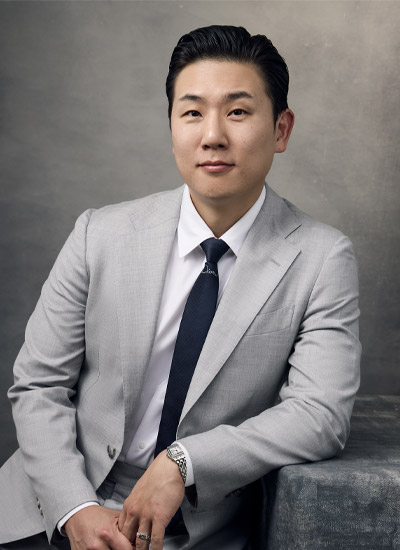
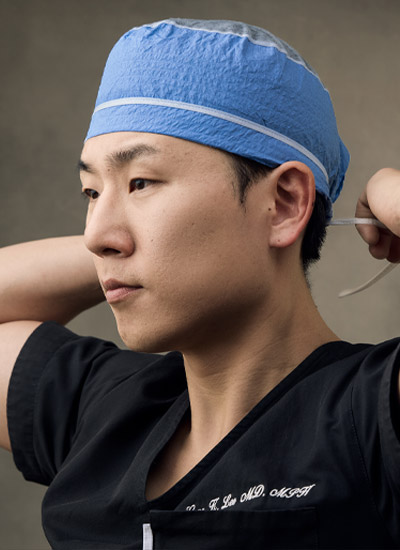
Meet Gene K. Lee MD, MPH
Board-Certified Plastic Surgeon
At LA MÔEM Plastic Surgery, Dr. Gene K. Lee combines advanced surgical training with a thoughtful, ethical approach to aesthetic care. Known for his natural-looking results and deep respect for each patient’s unique goals and cultural identity, Dr. Lee creates personalized treatment plans focused on safety, integrity, and long-term satisfaction. When you choose Dr. Lee, you’re choosing a surgeon who values your trust and is dedicated to helping you look and feel your best—authentically.





Los Angeles Scar Revision FAQs
Can a plastic surgeon completely erase a scar?
No. Scar revision can make a scar less noticeable, but it cannot make injured skin identical to skin that was never cut or damaged. The goal is to improve qualities such as width, texture, contour, position, color, or function.
How do I know if my scar needs revision?
A scar may be worth evaluating if it remains unusually wide, raised, depressed, tethered, irregular, painful, or functionally restrictive after appropriate healing. Some scars also benefit from treatment because their position or direction makes them unnecessarily conspicuous.
How long should I wait before scar revision?
Many scars continue maturing for months and may improve without additional surgery. In some cases, waiting a year or longer allows the scar to reach a more stable appearance. However, scars causing functional problems or significant contracture may require earlier assessment.
Can scars from previous surgery be revised?
Yes. Surgical scars are among the scars commonly evaluated for revision. If an incision widened, healed irregularly, became depressed, or developed abnormal scar tissue, Dr. Lee can determine whether another closure or a non-surgical treatment could improve it.
Can scar revision fix a tummy tuck or C-section scar?
Potentially. Lower abdominal scars can become widened, raised, depressed, asymmetrical, or tethered. The appropriate revision depends on the quality and position of the scar as well as the surrounding abdominal tissues.
Can facial scars be revised?
Yes. Scar revision can be performed on the face, but facial treatment requires particular attention to natural creases, skin-tension lines, surrounding facial structures, and preserving normal expression.
What is the difference between a hypertrophic scar and a keloid?
Both can appear raised. A hypertrophic scar remains within the original boundaries of the wound, while a keloid grows beyond them. Keloids also have a greater tendency to recur and may require a different treatment strategy.
Does cutting out a scar just create another scar?
Yes, but the purpose of surgical revision is to replace an unfavorable scar with a new incision created under more controlled conditions. Dr. Lee may change the scar’s position, orientation, tension, or closure technique to give the new scar an opportunity to heal more favorably.
Can CO2 laser remove surgical scars?
CO2 laser resurfacing cannot completely remove a surgical scar, but it may improve certain differences in texture and surface irregularity. Dr. Lee’s current non-surgical offerings specifically include CO2 resurfacing for concerns that include scarring.
Is laser treatment better than surgical scar revision?
One is not universally better. They address different problems. Laser resurfacing may be appropriate when texture is the primary concern, while a substantially widened, poorly positioned, tethered, or contracture scar may require surgical correction.
Can a depressed scar be improved?
Potentially. Depressed scars may result from loss of underlying tissue or scar tissue tethering the skin to deeper structures. The appropriate treatment depends on what is creating the indentation.
Can scar revision improve pain or tightness?
If discomfort is caused by scar tissue pulling on surrounding structures or restricting movement, surgical release may improve both function and comfort. Not all scar-related pain has the same cause, however, so an examination is necessary.
Will I need general anesthesia for scar revision?
Not necessarily. Small revisions may be performed using local anesthesia, while larger or more complex procedures may require sedation or general anesthesia. The appropriate option depends on the scar and the extent of surgery.
How long does scar revision take to heal?
Initial healing after surgical revision may take approximately one to two weeks, but scar maturation continues much longer. The new scar may continue softening and fading for several months and sometimes a year or longer.
Can a revised scar become raised again?
Yes. Patients who naturally form hypertrophic scars or keloids may develop abnormal scar tissue again. Dr. Lee will consider your previous scar history when discussing the likelihood of recurrence and the most appropriate treatment plan.