



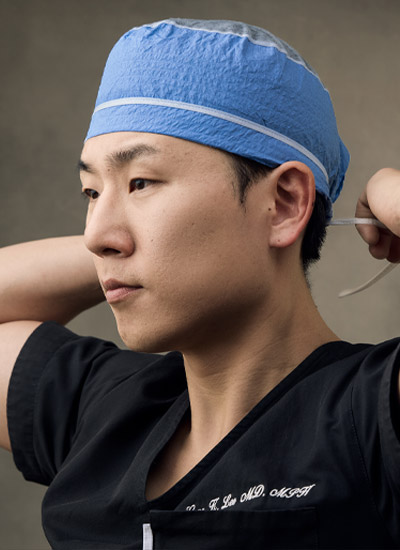
Gene K. Lee, MD, MPH
Breast Reduction in Beverly Hills, CA
Breast reduction surgery, also known as reduction mammaplasty, reduces the size and weight of overly large breasts while reshaping them into a more balanced position on the chest. For many patients, the procedure is as much about physical comfort as appearance. Heavy breasts can contribute to neck, shoulder, and back discomfort, make exercise difficult, leave painful grooves from bra straps, and affect how easily clothing fits.
At LA MÔEM Plastic Surgery in Beverly Hills, board-certified plastic surgeon Gene K. Lee, MD, MPH takes an individualized approach to breast reduction. Surgery is planned around your anatomy, breast size, degree of sagging, body proportions, and the amount of reduction that can safely achieve your goals.
Rather than simply making the breasts smaller, Dr. Lee reshapes the remaining breast tissue and repositions the breasts to create a lighter, more proportional contour that feels appropriate for your frame.
Continue reading to learn more about breast reduction in Beverly Hills with Dr. Gene K. Lee, or contact us online today to schedule your consultation. We are located in Beverly Hills and proudly welcome patients from the Inland Empire, San Fernando Valley, Downtown Los Angeles, Pasadena, and the greater Los Angeles area.
Quick Links
- What Will Breast Reduction Scars Look Like?
- Will Breast Reduction Improve Breast Asymmetry?
- Why Choose Dr. Gene K. Lee for Breast Reduction in Beverly Hills, CA?
- What to Expect from a Breast Reduction Consultation with Dr. Gene K. Lee
- Can I Breastfeed After a Breast Reduction?
- What Is Breast Reduction Recovery Like?
- How Long Do Breast Reduction Results Last?
- FAQs
What Is Breast Reduction?
Breast reduction is a surgical procedure designed to remove excess breast tissue, fat, and skin so that the breasts are smaller, lighter, and more proportional to the rest of the body.
For patients with significantly enlarged breasts, size can affect much more than appearance. The physical weight of the breasts may place persistent strain on the shoulders, neck, and upper back. Exercise can become uncomfortable, supportive bras may leave deep indentations along the shoulders, and moisture or friction beneath the breasts can contribute to recurring skin irritation.
There can also be a significant lifestyle component. Some patients find themselves modifying the way they dress, avoiding certain physical activities, or feeling that their breast size is disproportionate to the rest of their figure.
Breast reduction addresses these concerns by reducing excess volume while simultaneously reshaping the breast. The nipple and areola are typically repositioned to suit the newly created contour, and excess skin is removed so that the breast sits in a more elevated position.
Rather than predetermining a cup size, Dr. Lee plans your reduction around your individual anatomy and the degree of change needed to create a comfortable, balanced result.
What Can Breast Reduction Address?
Patients pursue breast reduction for many different reasons, and the decision is often based on a combination of physical and aesthetic concerns.
Breast reduction may help patients experiencing:
- Breasts that feel disproportionately large or heavy
- Chronic neck, shoulder, or upper back discomfort related to breast weight
- Deep shoulder indentations from bra straps
- Recurring irritation or rashes beneath the breasts
- Difficulty exercising comfortably
- Breast movement or discomfort during physical activity
- Difficulty finding bras, swimsuits, or clothing that fit properly
- Significant breast sagging associated with breast weight
- Enlarged or stretched areolas
- Breast asymmetry
- Self-consciousness related to disproportionately large breasts
Dr. Lee takes time to understand which concerns matter most to you so that the operation is designed around the way you actually live, rather than simply a measurement of breast size.
Who Is a Good Candidate for Breast Reduction?
You may be a good candidate for breast reduction if the size or weight of your breasts causes physical discomfort, interferes with daily activities, or feels out of proportion with the rest of your body.
Ideal candidates are generally in good overall health, maintain realistic expectations, and understand the recovery and scarring associated with surgery.
Breast reduction may be appropriate if:
- You feel that your breasts are excessively large for your frame
- Breast weight contributes to neck, shoulder, or back discomfort
- Physical activity is uncomfortable because of your breast size
- Your bra straps regularly dig into your shoulders
- You experience recurrent irritation beneath the breasts
- You are bothered by significant sagging associated with heavy breasts
- You would like smaller breasts that better complement your proportions
- Your breast development is complete
- You are at a relatively stable weight
- You do not smoke or are willing to stop as directed before and after surgery
Weight fluctuations can affect breast size and shape, so patients who are actively planning significant weight loss may benefit from reaching a more stable weight before surgery.
Future pregnancy can also change breast volume and skin elasticity. Patients who expect to become pregnant should discuss their plans with Dr. Lee so he can explain how those changes may affect long-term results.
How Is Breast Reduction Performed?
Dr. Lee determines the surgical plan based on your starting breast size, how much tissue needs to be removed, the amount of skin laxity, nipple position, breast shape, asymmetry, and your desired proportions.
During surgery, excess breast tissue, fat, and skin are carefully removed. The remaining breast tissue is then reshaped to create a smaller, more balanced breast contour.
The nipple and areola are generally repositioned higher on the breast while remaining connected to underlying tissue, blood supply, and nerves. If the areolas have become enlarged or stretched, their diameter may also be reduced so that they remain proportional to the newly shaped breast.
Incisions are then carefully closed to support the new breast contour.
The amount removed from each breast does not necessarily need to be identical. Many patients naturally have some degree of breast asymmetry, and Dr. Lee can account for these differences when planning surgery.
Does Breast Reduction Include a Breast Lift?
In most cases, breast reduction naturally includes a lifting component.
Large, heavy breasts often stretch the skin and pull the nipple and breast tissue downward over time. Simply removing internal volume without reshaping the skin envelope would not adequately address this change.
During breast reduction, Dr. Lee removes excess tissue and skin while repositioning the remaining breast tissue and nipple to create a more elevated contour.
This differs somewhat from an isolated breast lift, where the primary goal is improving sagging and shape without substantially reducing breast volume.
For a reduction patient, the two objectives work together: the breast becomes lighter while also being reshaped into a more proportional position.
How Small Can I Go With Breast Reduction?
One of the most common questions patients ask is what cup size they will be after surgery.
Cup size can be useful when describing your preferences, but it is not an exact surgical measurement. Bra sizing varies considerably by brand, style, and manufacturer. For that reason, promising a specific postoperative cup size can be misleading.
Instead, Dr. Lee will discuss how much reduction is appropriate based on your starting anatomy, breast width, tissue characteristics, nipple blood supply, body proportions, and personal preferences.
Some patients want a substantial reduction because breast weight has caused years of physical discomfort. Others want to remain relatively full but achieve a lighter and more proportional shape.
During your consultation, be specific about what feels too large now and what you hope will feel different after surgery. Photographs, clothing concerns, activity limitations, and your preferred overall proportions can all help Dr. Lee understand the result you are seeking.
What Incisions Are Used for Breast Reduction?
Breast reduction requires incisions because excess skin and breast tissue need to be removed and the remaining breast must be reshaped.
The incision pattern depends primarily on the extent of reduction and the amount of skin that needs to be removed.
Depending on your anatomy, a reduction may involve an incision around the areola and vertically down the lower portion of the breast. Larger reductions or breasts with greater skin laxity may require an additional incision along the breast crease, creating what is commonly called an anchor pattern.
Dr. Lee chooses the incision pattern that gives him appropriate access to reshape the breast while avoiding unnecessary incisions whenever possible.
Your individual scar pattern will be explained during your consultation so that you understand exactly where the incisions will be located before choosing surgery.
What Will Breast Reduction Scars Look Like?
Scarring is an unavoidable part of breast reduction, and patients should consider that tradeoff carefully before surgery.
Initially, incision lines can appear pink, red, or more noticeable than the surrounding skin. They generally become softer and less prominent as healing progresses, although scars do not disappear completely.
Scar quality varies from patient to patient based on genetics, skin type, incision pattern, wound healing, sun exposure, and how closely postoperative instructions are followed.
Dr. Lee closes the incisions with attention to both breast shape and long-term scar appearance. Once your incisions have healed appropriately, he can also provide guidance regarding scar care and protection.
Many breast reduction patients ultimately feel that the improvement in breast weight, comfort, and proportion outweighs the presence of scars, but the decision is personal and should be made with a clear understanding of that exchange.
Will Breast Reduction Improve Breast Asymmetry?
Breast asymmetry is extremely common, and a breast reduction can often improve differences in breast size and shape.
If one breast is naturally larger, Dr. Lee can remove different amounts of tissue from each side and reshape the breasts to create better overall balance.
Perfect symmetry is not a realistic surgical goal because the chest wall, rib cage, nipple position, and existing breast anatomy may also differ from side to side. However, carefully customized tissue removal can often create a much closer match.
If asymmetry is one of your primary concerns, Dr. Lee will evaluate each breast independently during your consultation and incorporate those differences into your surgical plan.
Why Choose Dr. Gene K. Lee for Breast Reduction in Beverly Hills, CA?
Breast reduction combines reconstructive principles with aesthetic breast surgery. The surgeon must safely reduce breast volume while preserving healthy tissue, reshaping the remaining breast, maintaining appropriate nipple position, and creating proportions that complement the patient’s body.
Dr. Gene K. Lee is a board-certified Plastic and Reconstructive Surgeon who completed both General Surgery and Plastic and Reconstructive Surgery residencies at the University of Southern California. His extensive surgical background informs a thoughtful approach that balances technical precision, safety, function, and aesthetics.
At LA MÔEM Plastic Surgery, breast surgery is never approached according to a single ideal shape or size. Dr. Lee considers your natural proportions, preferences, lifestyle, and personal identity when developing a treatment plan.
His consultations are deliberately thorough. He takes time to understand why you are considering breast reduction, explain what can realistically be accomplished, and ensure that you understand the procedure, scars, recovery, and long-term considerations before moving forward.
The intention is to create breasts that feel lighter and more comfortable while still looking natural and appropriate for your body.
What to Expect from a Breast Reduction Consultation with Dr. Gene K. Lee
Your consultation begins with a conversation about what has led you to consider breast reduction.
Dr. Lee will want to know whether you experience physical symptoms, how your breast size affects exercise or daily life, what you like and dislike about your current breast shape, and how much smaller you hope to become.
Your health history will also be reviewed in detail. This may include previous breast procedures, pregnancies, medications, smoking history, weight changes, family history, mammography or other breast imaging when applicable, and future pregnancy or breastfeeding plans.
Dr. Lee will then perform an examination and evaluate:
- Breast size and volume
- Breast width and overall proportions
- Skin quality and elasticity
- Nipple and areola position
- Degree of breast sagging
- Existing asymmetry
- Chest wall anatomy
- The amount of tissue that may safely be removed
You and Dr. Lee can then discuss the recommended incision pattern, approximate degree of reduction, expected breast shape, recovery, scars, and possible risks.
This process ensures that both the physical and aesthetic goals of surgery are clearly defined before entering the operating room.
Can I Breastfeed After a Breast Reduction?
Breastfeeding may still be possible after breast reduction, but surgery can affect a patient’s ability to produce or deliver a full milk supply.
The degree of impact depends partly on the surgical technique, how much breast tissue is removed, and how the nipple and milk-producing structures are affected.
There is no way to guarantee breastfeeding ability following breast reduction.
If you know that breastfeeding is important to you in the future, discuss this openly with Dr. Lee before surgery. He can explain how your anatomy and planned reduction may affect this consideration so that you can make an informed decision about timing.
What Is Breast Reduction Recovery Like?
Immediately after breast reduction, the breasts will be swollen, tender, and positioned higher than their eventual resting position. Dressings and a supportive surgical bra are typically used to protect the incisions and reduce unnecessary movement while healing begins.
Dr. Lee will provide detailed instructions regarding incision care, medications, bathing, sleep position, activity, and when to return for postoperative appointments.
During the first week, patients should prioritize rest while still taking short, gentle walks as instructed. Reaching, lifting, and strenuous upper-body activity will be restricted.
Many patients begin feeling significantly more comfortable during the second and third weeks and may return to desk-based or other non-strenuous work depending on how they are healing and the physical demands of their job.
Exercise and heavy lifting require a more gradual return. Dr. Lee will monitor your healing and let you know when each level of activity is appropriate rather than relying on a single recovery timeline for every patient.
Swelling continues to decrease over the following weeks and months. As the tissues soften and settle, the breasts gradually assume a more natural position and shape.
Scars mature much more slowly and may continue changing for a year or longer.
How Long Do Breast Reduction Results Last?
Breast tissue and skin removed during surgery do not grow back in the same way, so breast reduction can provide a long-lasting change in breast size and proportion.
However, your breasts will continue to respond to your body throughout life.
Significant weight gain or loss can alter breast volume. Pregnancy may stretch the tissues or change breast size, and the natural aging process will gradually affect skin elasticity and breast position.
Maintaining a relatively stable weight and healthy lifestyle can help preserve your result for many years.
Even as the breasts naturally change over time, patients generally retain a meaningful reduction compared with their preoperative breast size.
Schedule Your Beverly Hills Breast Reduction With Dr. Gene K. Lee
At LA MÔEM Plastic Surgery, Dr. Gene K. Lee develops each breast reduction around the patient’s anatomy and individual priorities. His focus is not simply on removing volume, but on creating a smaller breast that remains balanced, natural, and harmonious with the rest of the figure.
To schedule your breast reduction consultation in Beverly Hills, call LA MÔEM Plastic Surgery at (310) 919-0777 or complete our online contact form.
We proudly welcome patients from Beverly Hills, Los Angeles, Pasadena, Downtown Los Angeles, the San Fernando Valley, the Inland Empire, and surrounding communities.
Meet Gene K. Lee MD, MPH
Board-Certified Plastic Surgeon
At LA MÔEM Plastic Surgery, Dr. Gene K. Lee combines advanced surgical training with a thoughtful, ethical approach to aesthetic care. Known for his natural-looking results and deep respect for each patient’s unique goals and cultural identity, Dr. Lee creates personalized treatment plans focused on safety, integrity, and long-term satisfaction. When you choose Dr. Lee, you’re choosing a surgeon who values your trust and is dedicated to helping you look and feel your best—authentically.







Beverly Hills Breast Reduction FAQs
Is breast reduction only performed for medical reasons?
No. Some patients pursue breast reduction primarily because large breasts cause physical symptoms, while others simply feel that their breasts are disproportionately large for their body. Many patients have both functional and aesthetic motivations. Dr. Lee considers the complete picture when determining whether surgery is appropriate.
Does breast reduction help with back and neck pain?
Breast reduction may improve neck, shoulder, or back discomfort when the weight of excessively large breasts is contributing to those symptoms. However, pain can have many causes, so surgery cannot guarantee that every source of discomfort will resolve.
Will my breasts look lifted after breast reduction?
Yes, breast reduction typically includes reshaping and elevating the breast tissue as volume and excess skin are removed. The nipple and areola are also generally repositioned higher on the breast to complement the smaller contour.
Can liposuction alone be used for breast reduction?
Liposuction can remove fat but cannot remove significant excess skin or reshape sagging breast tissue. In select patients with appropriate anatomy, it may have a role in breast contouring, but a traditional breast reduction is generally needed when significant tissue removal and lifting are required.
Do I need to lose weight before breast reduction?
Not necessarily, but being near a stable weight is helpful because substantial weight loss after surgery can alter breast size, shape, and skin elasticity. If you plan to lose a significant amount of weight, Dr. Lee can help you decide whether it makes sense to do so before surgery.
Can breast reduction correct uneven breasts?
Breast reduction can often substantially improve breast asymmetry by allowing Dr. Lee to remove and reshape tissue differently on each side. Some natural asymmetry may remain because no two breasts or sides of the chest are perfectly identical.
When can I wear a regular bra again after breast reduction?
Patients generally begin recovery in a supportive postoperative bra. The timing for transitioning into other bras depends on incision healing, swelling, comfort, and Dr. Lee’s recommendations. Underwire bras may need to be avoided until the lower breast incisions are sufficiently healed.
When can I sleep on my side after breast reduction?
You will generally need to sleep on your back during the early stages of recovery to minimize pressure on the breasts and incisions. Dr. Lee will let you know when your healing has progressed enough to comfortably return to side sleeping.
Can I exercise after breast reduction?
Walking is encouraged relatively early, but strenuous exercise, running, weight training, and heavy lifting need to wait until the tissues have healed sufficiently. Dr. Lee will gradually increase your permitted activity during follow-up visits.
Will I lose nipple sensation after surgery?
Temporary sensation changes can occur and often improve as swelling resolves and nerves recover. Permanent changes are also possible. The risk varies with the extent and technique of the reduction and will be discussed before surgery.
Will breast reduction affect mammograms?
You should continue routine breast screening after breast reduction according to recommendations from your healthcare providers. Because surgery changes the internal architecture of the breast and creates scar tissue, you should tell the imaging facility that you have previously undergone breast reduction.
Should I wait until after pregnancy to have breast reduction?
Not necessarily. Some patients prefer to wait because pregnancy and breastfeeding can change the results, while others choose surgery earlier because their breast size is already significantly affecting comfort and quality of life. If future pregnancy is part of your plans, Dr. Lee can help you weigh the benefits of surgery now against the possibility of changes later.