




Gene K. Lee, MD, MPH
Capsular Contracture Treatment in Beverly Hills, CA
Breast implants are surrounded by a thin layer of scar tissue that the body naturally creates as part of the healing process. In most patients, this capsule remains soft and flexible and goes unnoticed. Capsular contracture occurs when that scar tissue becomes unusually tight around the implant, causing the breast to feel firmer and, in more advanced cases, become painful or visibly distorted.
Capsular contracture can develop after breast augmentation or reconstruction and may affect one or both breasts. Some cases are relatively mild, while others can noticeably change the position, shape, or feel of the breast and require revision surgery.
At LA MÔEM Plastic Surgery in Beverly Hills, board-certified plastic and reconstructive surgeon Gene K. Lee, MD, MPH, carefully evaluates the implant, surrounding scar tissue, breast shape, and your individual symptoms before recommending capsular contracture treatment. Depending on the situation, your surgical plan may involve treatment of the capsule, implant removal, implant replacement, or additional breast reshaping.
Continue reading to learn more about capsular contracture treatment in Beverly Hills with Dr. Gene K. Lee, or contact us online today to schedule your consultation. We are located in Beverly Hills and proudly welcome patients from the Inland Empire, San Fernando Valley, Downtown Los Angeles, Pasadena, and the greater Los Angeles area.
Quick Links
What Is Capsular Contracture?
Whenever a breast implant is placed, the body naturally develops scar tissue around it. This thin membrane is called the capsule.
A capsule is normal, as it is part of the body’s response to a foreign object and doesn’t mean anything has gone wrong with the breast augmentation.
With capsular contracture, the scar tissue tightens around the implant more than it should. As the capsule contracts, it can squeeze the implant and make the breast feel firm. More significant tightening may alter the implant’s position or shape, make the breast appear unusually round or elevated, create asymmetry, or cause discomfort.
The degree of contracture varies considerably from patient to patient.
Mild contracture may cause only subtle firmness without changing the breast’s appearance. A more advanced contracture can create obvious distortion and significant pain.
Because breast firmness and changes in shape can have several causes, an examination is important before assuming capsular contracture is responsible.
What Causes Capsular Contracture?
The exact cause of capsular contracture is not completely understood. The body creates scar tissue around every breast implant, but only some capsules become excessively tight. Several factors may contribute to contracture, and in many patients, no single identifiable reason is known.
Capsular contracture has been associated with factors such as:
- Inflammation around the implant
- Infection
- Hematoma, or a collection of blood around the implant
- Seroma, or a collection of fluid
- Previous breast surgery
- Implant-related factors
- Individual differences in the body’s healing and scar response
Capsular contracture can also occur despite an otherwise uncomplicated breast augmentation and appropriate postoperative care.
Patients considering breast augmentation should understand that implants are not considered lifetime devices, and revision surgery may eventually become necessary for capsular contracture or other implant-related changes.

What Are the Symptoms of Capsular Contracture?
The most recognizable symptom of capsular contracture is increasing firmness of the breast around an implant.
However, the condition does not always progress in the same way.
Some patients initially notice that one breast simply feels firmer than the other. Others become concerned because an implant seems to sit higher, the breast looks rounder or tighter, or the two breasts no longer appear symmetrical.
Symptoms may include:
- Increasing firmness around a breast implant
- A breast that feels unusually tight or hard
- One breast becoming firmer than the other
- An implant appearing higher or differently positioned
- Increasing breast asymmetry
- A round, tight, or distorted breast shape
- Visible changes in breast contour
- Breast tenderness or discomfort
- Pain in more advanced cases
If you notice a new change in the appearance or feel of a breast implant, it is worth having the area evaluated rather than assuming that the implant itself has simply shifted.
Breast pain, swelling, asymmetry, implant firmness, or a new change in breast shape can have causes other than capsular contracture. Dr. Lee can determine whether the capsule, implant, breast tissue, or another factor is responsible.
What Are the Four Grades of Capsular Contracture?
Plastic surgeons commonly describe the severity of capsular contracture using the Baker grading system.
Grade I
The breast remains soft and looks natural. A capsule exists around the implant, as expected, but there is no clinically significant contracture.
Grade II
The breast feels somewhat firmer than normal but still appears relatively natural. Some patients with Grade II contracture may notice the change when touching the breast but have little or no visible distortion.
Grade III
The breast is noticeably firm and has developed an abnormal appearance. Capsular tightening may alter breast shape, implant position, or symmetry.
Grade IV
The breast is hard, visibly abnormal, and painful. Grade IV represents the most severe form of capsular contracture.
Grades III and IV are generally considered more significant because the contracture has begun to affect the appearance of the breast, cause discomfort, or both.
The Baker grade is useful, but it is only one component of surgical planning. Dr. Lee also considers your symptoms, implant history, anatomy, cosmetic goals, and whether other implant-related concerns are present.
How Is Capsular Contracture Diagnosed?
Your evaluation begins with a discussion of what has changed.
Dr. Lee will ask when you first noticed firmness, whether the change has progressed, whether the breast is painful, and whether you have noticed changes in implant position or breast shape.
Your implant history is also important. If available, information about the type, size, placement, manufacturer, and age of your implants can help provide a clearer picture.
During the physical examination, Dr. Lee will evaluate:
- Breast firmness
- Implant position
- Breast shape and symmetry
- Skin and soft-tissue quality
- The location and severity of discomfort
- Previous surgical scars
- Changes that may suggest another implant-related issue
In some situations, additional imaging may be appropriate, particularly when there is concern about implant integrity or another condition that physical examination alone cannot fully evaluate.
How Is Capsular Contracture Treated?
Treatment depends on the severity of the contracture, the symptoms it causes, the condition of the implant, and what you want your breasts to look like afterward.
Mild firmness that causes little or no discomfort and does not visibly distort the breast may be approached differently from a painful, hard contracture that has significantly changed breast shape.
For more significant capsular contracture, revision surgery may involve one or more of the following:
- Releasing or removing restrictive scar tissue
- Removing part or all of the capsule
- Removing the existing breast implant
- Replacing the implant with a new implant
- Adjusting or creating a new implant pocket
- Changing implant size or other characteristics when appropriate
- Removing the implants without replacement
- Combining implant removal or revision with a breast lift when needed to improve breast shape
Dr. Lee’s current breast implant removal approach similarly recognizes that implant revision can range from straightforward removal to treatment of surrounding scar tissue, implant exchange, or additional breast reshaping.
The appropriate treatment is based on your individual anatomy rather than automatically performing the most extensive operation possible.
What Is a Capsulectomy?
A capsulectomy is a procedure in which some or all of the scar capsule surrounding a breast implant is surgically removed.
The amount of capsule that should be removed varies according to the reason for surgery and the characteristics of the surrounding tissues.
Capsulectomy terminology can be confusing, particularly because several terms are frequently used online.
- A partial capsulectomy removes only a portion of the capsule.
- A total capsulectomy removes the entire capsule but does not necessarily remove it in one intact piece.
- A total intact capsulectomy refers to complete removal of the capsule as a single unit when technically appropriate.
- The phrase en bloc capsulectomy refers to removing the implant capsule with a margin of surrounding uninvolved tissue and is primarily an oncologic operation used when an implant-associated cancer is established or suspected after appropriate medical evaluation.
An en bloc procedure is not automatically required simply because a patient has capsular contracture.
Dr. Lee determines how to manage the capsule based on what is medically and surgically appropriate for the individual patient.
Do Breast Implants Need to Be Removed for Capsular Contracture?
Capsular contracture treatment often involves operating on both the capsule and the implant, but what happens to the implant depends on your circumstances and goals.
- Some patients want to keep their breast implants. In those cases, Dr. Lee may discuss removing the existing implant, treating the restrictive capsule, and placing a new implant as part of revision surgery. Dr. Lee may also reconsider implant characteristics and pocket position as part of the overall plan.
- Other patients decide that capsular contracture is the point at which they no longer want breast implants. For these patients, breast implant removal may be performed without replacement. Depending on how the breast tissue and skin have changed, we may also suggest a breast lift or another reshaping technique to create a natural contour after implant removal.
The priority is to first address the problem safely and then determine what breast shape, size, and implant strategy best align with your long-term preferences.
Can Capsular Contracture Affect Only One Breast?
Yes. Capsular contracture can affect one or both breasts, and the severity does not necessarily need to be the same on each side.
One breast may remain soft while the other gradually becomes firmer or changes shape. This can create noticeable asymmetry even if the original breast augmentation had been balanced.
When only one breast appears affected, Dr. Lee still evaluates both sides.
Breast revision planning involves looking at the breasts as a pair, because changing an implant, pocket, or breast contour on one side may influence how the two breasts relate to one another after surgery.
Why Choose Dr. Gene K. Lee for Capsular Contracture Treatment in Beverly Hills, CA?
Capsular contracture is both a medical and aesthetic concern. Treating it requires more than removing scar tissue. The plastic surgeon must evaluate the capsule, implant, implant pocket, breast tissue, skin quality, existing scars, symmetry, and the patient’s long-term goals before deciding how revision surgery should be performed.
Dr. Gene K. Lee is a board-certified Plastic and Reconstructive Surgeon who completed residencies in both General Surgery and Plastic and Reconstructive Surgery at the University of Southern California. His practice includes a range of primary and revision breast procedures, including breast augmentation and implant removal.
At LA MÔEM Plastic Surgery, Dr. Lee takes time to understand not only what has changed physically but also what you want from your breasts going forward.
Some patients want to restore the softness and appearance they had after their original augmentation. Some want to change implant size or shape. Others decide they would prefer to remove their implants altogether.
Dr. Lee develops a surgical plan based on your anatomy, symptoms, implant history, and preferences, while emphasizing patient safety, proportion, and natural-looking results.
What Is Recovery Like After Capsular Contracture Surgery?
Recovery depends largely on what is required during surgery.
A relatively limited revision will not necessarily have the same recovery as a more extensive capsulectomy combined with implant exchange and breast reshaping.
During the early recovery period, patients can expect some combination of:
- Breast swelling
- Bruising
- Tightness
- Soreness or tenderness
- Temporary changes in breast or nipple sensation
- Restrictions on lifting and upper-body activity
- A supportive surgical bra may be recommended while the breasts begin to heal.
Dr. Lee will provide specific instructions regarding incision care, medications, showering, sleeping position, activity restrictions, and follow-up appointments.
Light walking is generally encouraged during recovery, but exercise, heavy lifting, and strenuous upper-body activity will need to wait until the tissues have healed sufficiently.
Patients should also remember that early swelling can temporarily affect breast shape and symmetry. Breasts continue to soften and settle as healing progresses, so do not judge the final contour immediately after surgery.
If a breast lift or more extensive reshaping is performed at the same time, the recovery plan will reflect those additional procedures.
Can Capsular Contracture Come Back?
Yes. Capsular contracture can recur after treatment.
Surgery removes or releases the existing restrictive scar tissue, but the body will naturally form a new capsule around any new breast implant. There is no way to guarantee that this new capsule will never tighten.
Dr. Lee evaluates factors that may have contributed to the original contracture and considers the implant, pocket, surrounding tissues, and surgical strategy when developing the revision plan.
Patients who decide they no longer want to accept the future risks associated with implants may instead choose permanent implant removal. Others feel strongly about maintaining their augmentation and accept that another revision could potentially become necessary in the future.
Dr. Lee will discuss these tradeoffs openly so that you can make a decision that reflects your priorities.
Schedule Your Beverly Hills Capsular Contracture Consultation with Dr. Gene K. Lee
To schedule your capsular contracture consultation in Beverly Hills, call LA MÔEM Plastic Surgery at (310) 919-0777 or complete our online contact form.
We proudly welcome patients from Beverly Hills, Los Angeles, Pasadena, Downtown Los Angeles, the San Fernando Valley, the Inland Empire, and surrounding communities.
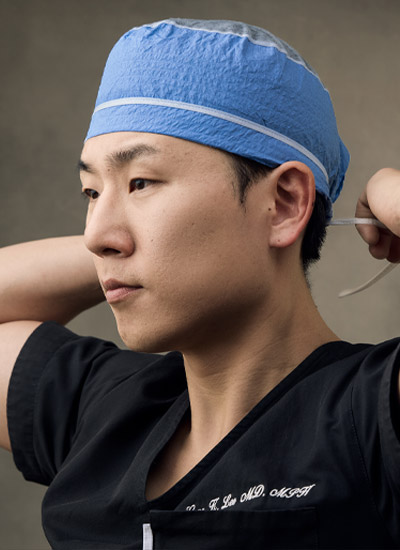
Meet Gene K. Lee MD, MPH
Board-Certified Plastic Surgeon
At LA MÔEM Plastic Surgery, Dr. Gene K. Lee combines advanced surgical training with a thoughtful, ethical approach to aesthetic care. Known for his natural-looking results and deep respect for each patient’s unique goals and cultural identity, Dr. Lee creates personalized treatment plans focused on safety, integrity, and long-term satisfaction. When you choose Dr. Lee, you’re choosing a surgeon who values your trust and is dedicated to helping you look and feel your best—authentically.







Los Angeles Capsular Contracture FAQs
Is it normal for breast implants to feel firm?
Some firmness can be normal, particularly during early recovery after breast augmentation. However, increasing firmness after the breast has already healed, especially when accompanied by pain, distortion, or a change in implant position, should be evaluated.
How soon can capsular contracture develop after breast augmentation?
Capsular contracture can develop at different points after surgery. It may become apparent relatively early or develop years after the implants were placed. A new change in breast firmness deserves evaluation regardless of how old the implants are.
Is capsular contracture dangerous?
Capsular contracture itself primarily causes firmness, distortion, and sometimes pain. However, new breast swelling, a mass, significant asymmetry, fluid around an implant, or another unusual change should not automatically be assumed to be capsular contracture. These symptoms warrant proper medical evaluation to determine their cause.
Does capsular contracture always hurt?
No. Mild capsular contracture may cause firmness without pain. Discomfort becomes more common as the contracture becomes more severe, and Baker Grade IV contracture is characterized by a hard, painful, abnormally appearing breast.
Can capsular contracture make an implant move?
A tightening capsule can alter how the implant sits within the breast pocket. An affected breast may appear higher, rounder, tighter, or differently shaped compared with the opposite side.
Can massage fix capsular contracture?
Patients should not attempt to aggressively manipulate or squeeze an implant to break up scar tissue. Once a significant contracture has formed, a qualified plastic surgeon should guide treatment after a proper examination.
Do I need a total capsulectomy for capsular contracture?
Not necessarily. The amount of capsule to remove depends on the individual case. Some patients may require partial capsule removal, while others may benefit from a total capsulectomy. Dr. Lee determines the appropriate approach after evaluating the implant, scar tissue, symptoms, and surgical goals.
Do I need an en bloc capsulectomy for capsular contracture?
Capsular contracture alone does not automatically require en bloc capsulectomy. The term “en bloc” refers to an oncologic technique involving removal of the capsule with a margin of surrounding tissue and is indicated when breast implant-associated cancer is established or suspected after appropriate workup.
Can I replace my implants after capsular contracture?
Yes, many patients elect to have their implants replaced during revision surgery. Dr. Lee can discuss whether implant exchange is appropriate and whether to consider changes to implant selection or pocket position.
Can I remove my implants instead?
Yes. Patients who no longer want implants may choose breast implant removal rather than replacement. Depending on the condition of the breast tissue and skin, we may also explore a lift or additional contouring.
Will my breasts look normal after capsular contracture surgery?
The goal is to improve firmness, distortion, discomfort, and breast balance, but the final result depends on the severity of the contracture, previous surgeries, tissue condition, implant strategy, and whether additional breast reshaping is needed. Dr. Lee will discuss realistic expectations after examining your breasts.
Does capsular contracture mean my implant ruptured?
No. Capsular contracture and implant rupture are separate complications, although both can affect the appearance or feel of the breast. If implant integrity is uncertain, Dr. Lee may recommend further evaluation or imaging.
Are breast implants permanent after revision surgery?
Breast implants are not lifetime devices. Even after successful revision, future implant-related changes can occur, and another operation may eventually become necessary.