


Heavy, hooded eyes can make you look tired even when you feel completely rested. The natural assumption is often that excess eyelid skin is the problem, and sometimes, it is. But the upper eyelids do not age in isolation; if the eyebrows have gradually descended, that lower brow position can push additional tissue toward the eyes and create heaviness that looks very similar to an eyelid problem.
That is why choosing between an upper blepharoplasty and an endoscopic brow lift is less about choosing the procedure you prefer and more about identifying where the change is actually coming from.
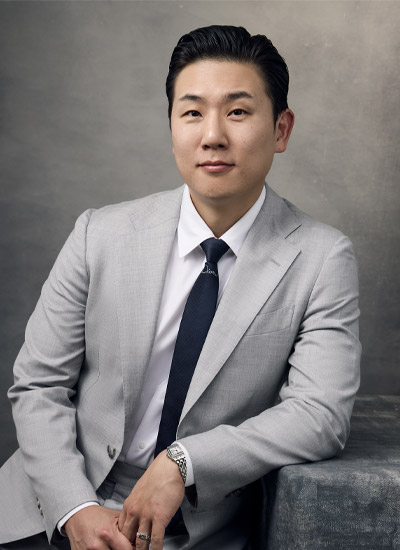
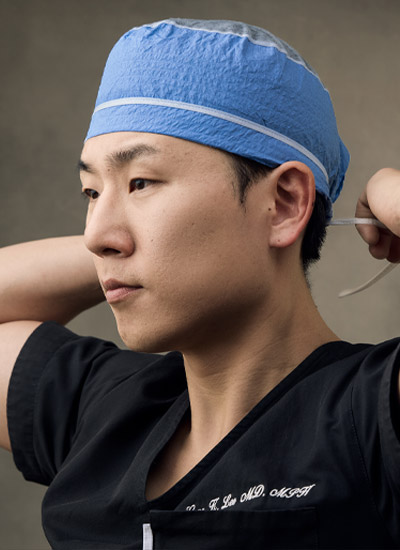
At LA MÔEM Plastic Surgery in Beverly Hills, board-certified plastic surgeon Dr. Gene K. Lee evaluates the eyelids, brows, forehead, and overall upper face together before recommending treatment.
What Does an Upper Blepharoplasty Treat?
Upper blepharoplasty focuses specifically on the upper eyelids.
As we age, eyelid skin can stretch and become redundant. Some people also naturally develop hooded eyelids at a younger age because of genetics. When enough excess skin accumulates, it can obscure the natural eyelid crease, make makeup application difficult, rest near the eyelashes, or create a consistently tired appearance.
During upper blepharoplasty, Dr. Lee places an incision within the natural eyelid crease and carefully removes excess skin. Fat and small amounts of other tissue may also be refined when appropriate.
You may be better suited for upper blepharoplasty if:
- Your eyebrows remain in a natural position, but the eyelids themselves have excess skin
- Skin folds cover or obscure the upper eyelid crease
- Eyelid skin rests close to the eyelashes
- Your eyes look hooded even when your forehead is completely relaxed
- You have difficulty applying eyeliner or eyeshadow because of excess eyelid skin
In these cases, raising the brows would not directly address the primary problem. The excess tissue is located on the eyelid itself.
What Does a Brow Lift Treat?
Over time, the forehead and eyebrows can descend. When the brow sits lower than it once did, tissue from the forehead can crowd the upper eyelid area and contribute to a heavy or hooded appearance.
Dr. Lee performs an endoscopic brow lift through small, discreet incisions in the scalp. The procedure elevates descended brow and forehead tissues into a more youthful position while avoiding the overly elevated or “surprised” appearance patients sometimes associate with older brow lift techniques.
A brow lift may be more appropriate if:
- Your eyebrows have noticeably descended over time
- The outer brow sits low and contributes to heaviness around the eyes
- You frequently raise your eyebrows or wrinkle your forehead to make your eyes feel more open
- Upper eyelid hooding improves significantly when the brow is gently elevated
- Your concern involves the forehead and brow position in addition to the eyelids
The key difference is anatomical: a brow lift improves heaviness coming from above the eyelid, while blepharoplasty removes excess tissue on the eyelid itself.
Why It’s Easy to Confuse the Two
The brow and upper eyelid are aesthetically connected.
If the brow descends, it pushes soft tissue downward toward the eyelid. If excess eyelid skin develops independently, the result can look remarkably similar in the mirror.
A common compensation pattern can also make the diagnosis less obvious. Some patients unconsciously keep their forehead muscles active throughout the day to hold low brows higher. They may not realize they are doing it until they deliberately relax their forehead and notice that the brows and eyelids suddenly feel much heavier.
Simply removing eyelid skin in someone whose primary issue is significant brow descent may therefore leave some of the original heaviness behind. Conversely, performing a brow lift on someone whose brow position is already appropriate can unnecessarily elevate the eyebrows without correcting excess eyelid skin.
Can You Need Both an Upper Blepharoplasty and a Brow Lift?
Yes, and this is relatively common because different parts of the upper face can age simultaneously.
A patient may have genuine excess upper eyelid skin and descended brows. In that situation, treating only one area may improve the eyes without creating the most balanced result.
Dr. Lee frequently combines upper eyelid surgery with an endoscopic brow lift when both contribute to upper-face heaviness. The brow can be returned to a more appropriate position while excess eyelid skin is conservatively removed.
Once he has corrected the brows’ position, Dr. Lee may need to remove less eyelid skin than originally seemed necessary. Evaluating these structures together helps preserve a natural eyelid shape and avoids an over-operated appearance.
What About Botox Instead of a Brow Lift?
Neuromodulators can sometimes create a subtle chemical brow lift by relaxing muscles that pull the eyebrows downward. For patients with mild brow descent who want a temporary, non-surgical improvement, this may be worth considering.
However, injectables cannot reproduce the degree or longevity of correction possible with surgery when brow descent is more significant. They also cannot remove substantial excess upper eyelid skin.
Dr. Lee offers both surgical and non-surgical treatments, so you can choose a treatment based on your anatomy rather than assuming surgery (or avoiding surgery) is always the right answer.
How Does Dr. Lee Decide Which Procedure You Need?
The consultation makes the distinction much clearer.
Dr. Lee evaluates the position and shape of the eyebrows, amount of excess upper eyelid skin, natural eyelid crease, forehead activity, facial symmetry, and how these structures interact.
He may also look at how the eyelids change when the eyebrows are placed in a more neutral position.
For some patients, the answer is straightforward: the brow looks good, and the eyelids have excess skin. For others, brow descent is creating much of the apparent hooding. And for many patients, both contribute.
Dr. Lee will help you make the appropriate decision for your anatomy rather than based on age, trends, or which procedure sounds less invasive. Instead, he will help you focus on understanding the anatomy responsible for the change you see.
Ready to Choose the Right Upper-Face Procedure? Partner with Dr. Lee
Dr. Gene K. Lee brings his experience, expertise, and artistic vision to every facial or body rejuvenation procedure. Dr. Lee and his team at LA MÔEM Plastic Surgery aim to help patients address what causes their discomfort, whether emotional or physical, and become the most authentic versions of themselves. When you choose Dr. Lee, you’re choosing a surgeon who values your trust and is dedicated to helping you look and feel your best – authentically.
Meet Gene K. Lee MD, MPH
Board-Certified Plastic Surgeon
At LA MÔEM Plastic Surgery, Dr. Gene K. Lee combines advanced surgical training with a thoughtful, ethical approach to aesthetic care. Known for his natural-looking results and deep respect for each patient’s unique goals and cultural identity, Dr. Lee creates personalized treatment plans focused on safety, integrity, and long-term satisfaction. When you choose Dr. Lee, you’re choosing a surgeon who values your trust and is dedicated to helping you look and feel your best—authentically.